Renewable Solar Power in India
 Verra VCSIndia
Sobre el proyecto
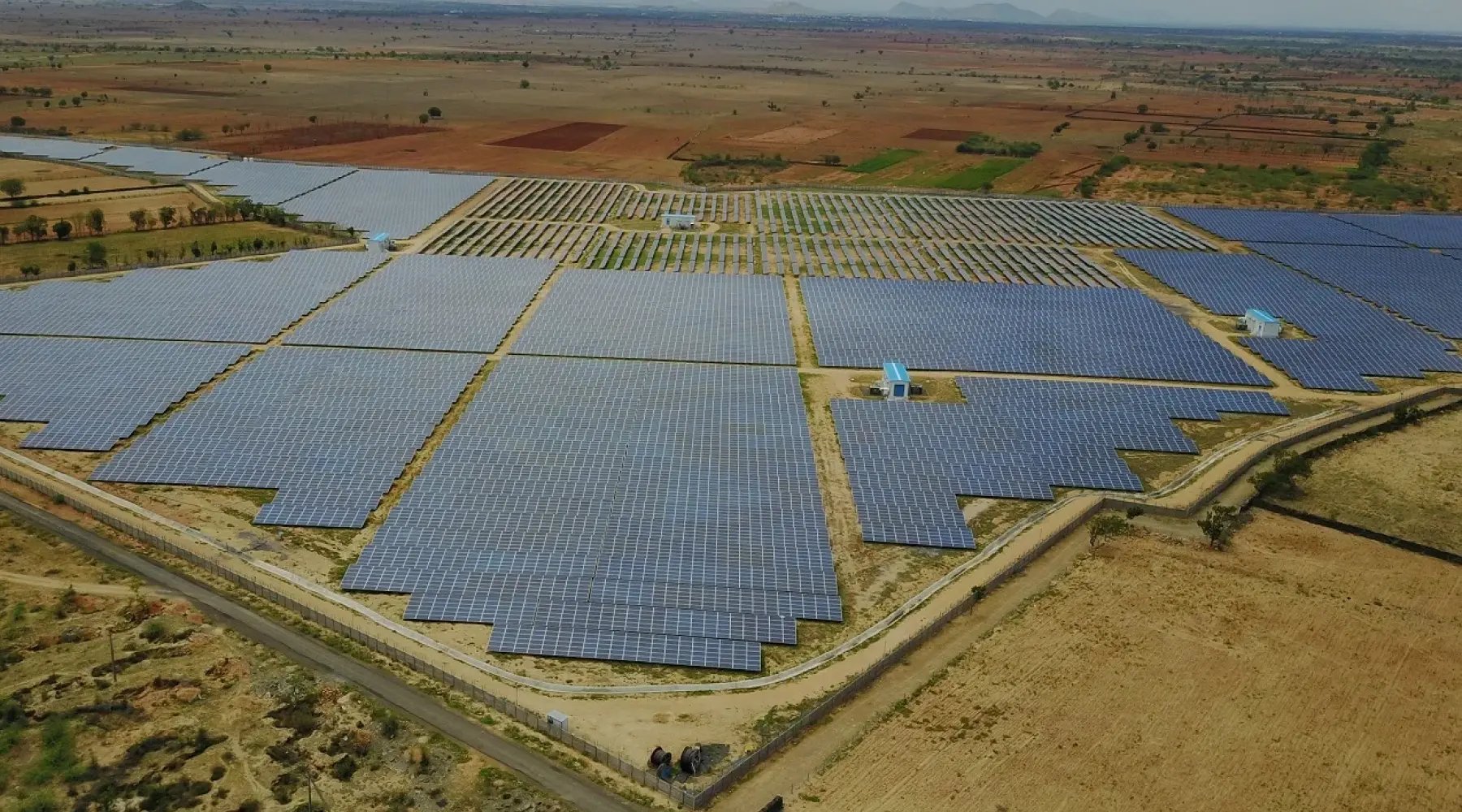
The Renewable Solar Power Project by ReNew Solar Power Private Limited is a large-scale solar installation in the Thar Desert region of Rajasthan, supplying renewable electricity to India's national grid. The site is one of the highest-solar-irradiance locations globally, and is built on hyper-arid desert land that is unsuitable for agriculture or forestry, avoiding land-use conflicts or displacement of natural ecosystems. The project is developed by Hero Solar Energy Private Limited and is registered with Verra under VCS 1851 using the ACM0002 methodology. The project avoids approximately 447,000 tCO₂e per year on average, supplying over 480,000 MWh of clean, zero-emission electricity annually to the regional power network. It has a 250 MW installed capacity and displaces generation from India's coal-dominant grid mix, where the emission factor remains high. The combination of scale, integrity of the avoided-emissions calculation, and large vintage availability makes the project a workhorse asset for buyers supporting renewable-energy development. Community benefits Formal employment in the Thar Desert: The project has created thousands of construction jobs and provides long-term technical roles in panel operations, maintenance, and site security across a district with limited formal employment options. Formalising rural labour: The project has introduced formal contracts, occupational safety standards, and social security to a workforce previously employed under informal seasonal arrangements. Clean water for surrounding villages: The CSR programme funds clean-water access schemes for villages neighbouring the site, alongside support for local schools and health clinics. Environmental and biodiversity benefits Displacing a coal-heavy grid: India's grid is among Asia's most carbon-intensive. Every generated MWh displaces high-emission coal power, reducing regional sulfur dioxide, nitrogen oxides, and particulate matter. Water security in a water-scarce region: Sola