
Jaguar Amazon Avoided Deforestation
 Verra VCSPeru
Sobre el proyecto
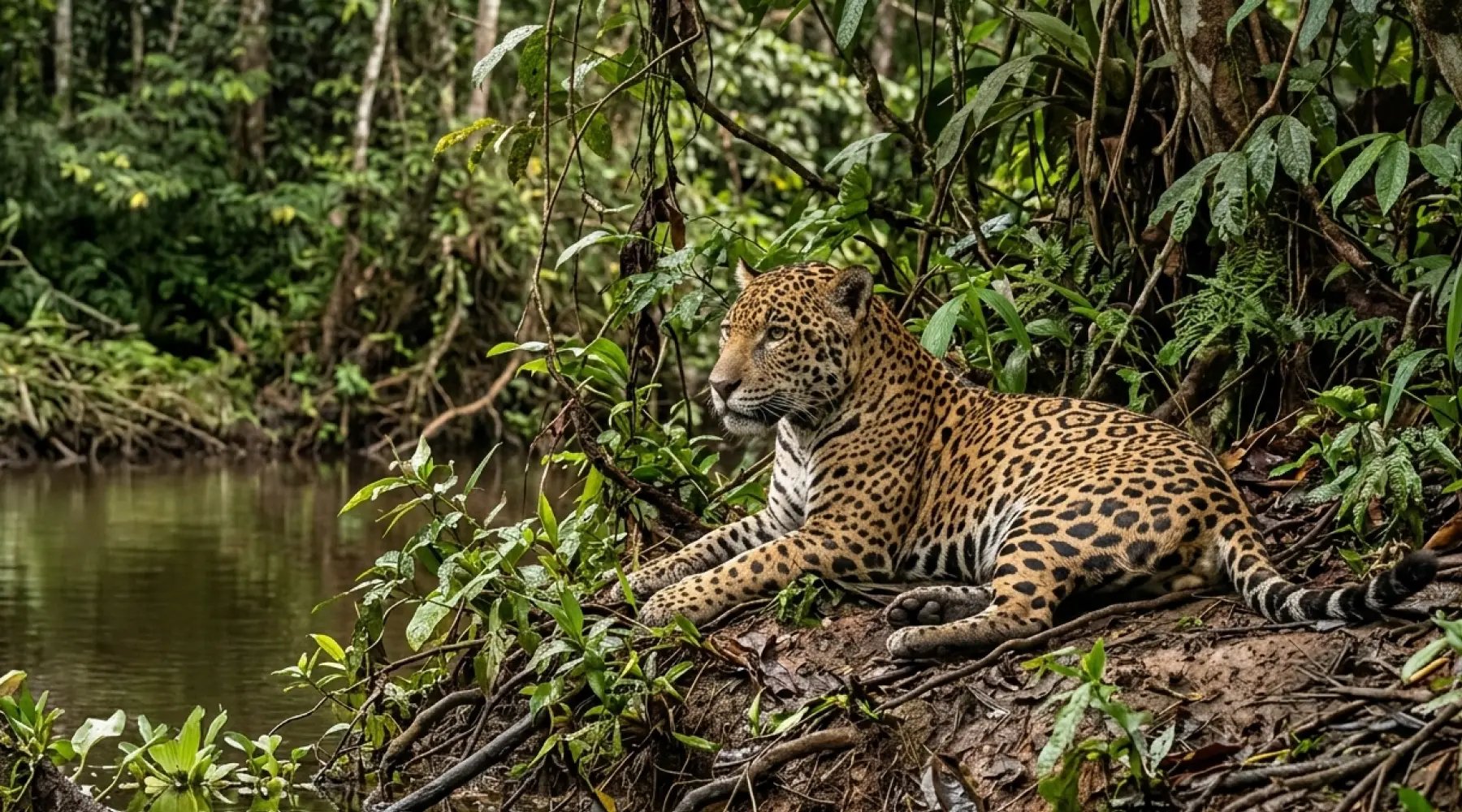
The Jaguar Amazon REDD+ Project protects more than 62,000 hectares of native Peruvian Amazon rainforest in the Madre de Dios Department, often referred to as the biodiversity capital of Peru. The project sits in the buffer zones of national parks and shields these highly vulnerable areas from the advancing agricultural frontier and from illegal gold mining expanding along the Interoceanic Highway. It is developed by Bosques Amazónicos (BAM) in partnership with Asociación Amazonia Resiliente, registered with Verra under VCS 2278 using the VM0015 methodology for Avoided Unplanned Deforestation. The project avoids an average of 248,321 tCO₂e per year through community-led surveillance and holds the CCB Gold Level status, which is the highest possible rating under the Climate, Community & Biodiversity (CCB) Standards. The crediting period runs 30 years (2020 to 2050), giving the project a strong long-term horizon under Verra's carbon-accounting framework. Community benefits Brazil-nut value-chain support: The project funds processing facilities and technical assistance for local castaña harvesters, allowing them to fetch fairer prices in international markets. Community forest surveillance: Local community members are trained and equipped with satellite data and GPS tools to patrol their concessions legally, protecting their ancestral and granted land rights against illegal invaders. Alternative green economies: Non-timber forest-product income lifts local family incomes and reduces the pull towards logging or mining as livelihood options. Environmental and biodiversity benefits Iconic species safeguarded: The project protects critical habitat for the giant otter (Ptenonura brasiliensis) , the jaguar (Panthera onca) , and the harpy eagle (Harpia harpyja) , among other Amazonian species. Deforestation shield: The project acts as a vital ecological buffer zone that connects fragmented conservation areas, allowing genetic flow and migration of large predators and primates.